Global Tech Salary Insights 2025
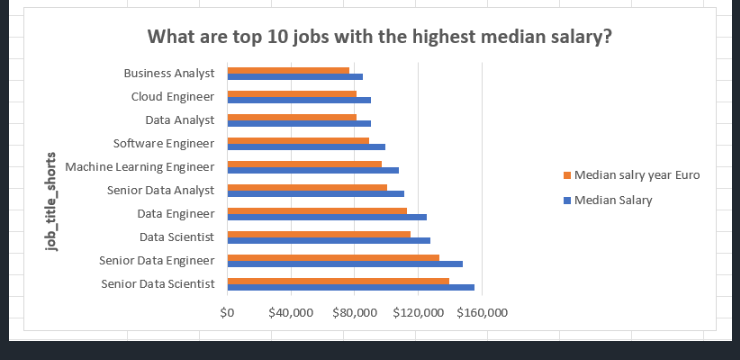
Global Tech Salary Insights 2025: An Analytics Dashboard for Career Planning Project Overview Global Tech Salary Insights 2025 is a data analytics project designed to bring clarity to the often confusing and scattered information about technology industry salaries. In a rapidly evolving job market, students, career changers, and even experienced professionals struggle to find reliable, consolidated data on what different roles pay and where the best opportunities are located. This project addresses that gap by analyzing salary trends across the global tech industry. The primary goal was to create a centralized "salary insights workbook" that identifies the highest-paying jobs projected for 2025, pinpoints the countries offering the best compensation, and explores the potential factors driving those trends. By standardizing all salary data into Euros (EUR) and presenting it through a visual and easy-to-read format, the project empowers individuals to make informed, data-driven career decisions rather than relying on guesswork. The Problem: Scattered Information & Opaque Career Decisions For anyone navigating the tech industry, understanding your market value is a critical yet difficult task. Salary information is often: 1. Scattered: Found across disparate job boards, forums, and outdated surveys. 2. Inconsistent: Reported in different currencies and formats without standardization. 3. Lacking Context: Raw numbers without insights into role seniority, company type, or geographic cost of living. This lack of clear, consolidated information makes it challenging to answer fundamental career questions like: "Which tech role should I specialize in for the best financial future?" and "Where in the world can I earn the most for my skills?" The Solution: A Data-Driven Salary Compass This project tackles these challenges by consolidating and analyzing salary data to provide actionable insights. 1. Centralized Insights: It brings together salary information into a single, coherent "workbook," eliminating the need to search through multiple sources. 2. Global & Role-Specific Analysis: The analysis goes beyond simple averages to identify the highest-paying roles for 2025 and the countries leading in compensation for those roles. 3. Contextual Understanding: It explores the why behind the numbers, investigating potential factors such as local demand for specific skills, cost of living, and industry hubs that contribute to higher pay in certain regions. 4. Actionable Career Guidance: The ultimate output is a tool that helps individuals identify the best career path for themselves and where to seek employment based on their salary goals. Methodology & Approach 1. Data Collection & Standardization: Salary data for various tech roles was gathered from reliable sources. A key step was standardizing all compensation figures into Euros (EUR) to enable accurate, currency-agnostic comparisons across different countries. 2. Exploratory Data Analysis (EDA): The cleaned data was analyzed to identify key metrics, including: Average salary by job title. Salary distribution (range, common values) for each role. Top-paying countries for the tech industry as a whole and for specific roles. 3. Factor Analysis: I investigated potential correlations between high salaries and external factors like the presence of major tech hubs, local economic conditions, and demand/supply dynamics for specific skill sets. 4. Visualization & Dashboard Creation: The insights were transformed into an intuitive, visual format. The goal was to create a "salary insights workbook" that is not just a report, but a tool for exploration, allowing users to easily compare roles and locations at a glance. Key Insights & Findings 1. Top-Paying Roles for 2025: The analysis identified a clear hierarchy of the highest-paying jobs in the tech industry for the projected year, highlighting roles that command a premium in the global market. 2. Geographic Pay Hubs: The project pinpointed specific countries and regions that offer the highest compensation packages, revealing significant geographic disparities in tech salaries. 3. Drivers of High Pay: The investigation into contributing factors shed light on why certain locations pay more. This includes the concentration of high-revenue tech companies, a competitive talent market for niche skills, and adjustments for local economic conditions. 4. Salary Benchmarks: For each major role (e.g., Data Scientist, Software Engineer, Cloud Architect), the workbook provides a clear picture of typical salaries and their common ranges, serving as a powerful benchmark for job seekers and professionals. Target Audience & Impact This project is designed for three primary groups: 1. Students & Career Changers: To identify which tech roles offer the best financial prospects and align with their interests. 2. Current Tech Professionals: To benchmark their own compensation against global standards and identify potential career moves for higher earning potential. 3. Job Seekers: To understand which countries are offering the most competitive salaries for their specific skill set, guiding their international job search. Future Enhancements To make this tool even more powerful, future iterations could include: 1. Experience Level Filtering: Adding granularity by breaking down salaries by entry-level, mid-level, and senior positions. 2. Skills-Based Analysis: Correlating specific technical skills (e.g., Python, AWS, AI/ML) with salary premiums. 3. Cost of Living Adjustment (COLA): Integrating cost-of-living data to provide a clearer picture of "real" purchasing power in different countries. 4. Interactive Dashboard: Developing a fully interactive web-based dashboard where users can filter and explore the data themselves in real-time. What I Learned This project was a powerful exercise in transforming raw data into a strategic tool for decision-making. I honed my skills in data cleaning, standardization (especially with currency conversion), and exploratory analysis to extract meaningful trends. The most valuable takeaway was learning how to frame a technical analysis around a specific user's needs in this case, providing clarity and actionable guidance for career planning. It reinforced my belief that data is most powerful when it is used to empower individuals to make better-informed decisions about their own futures.
Technologies
Comments (0)
Leave a Comment
No comments yet. Be the first to comment!